Interior painting, with the prep done right.
Owner-operated. Meticulous results. Free estimates.
Interior painting covers walls, ceilings, full rooms and accent walls. I handle the prep, the painting and the cleanup myself, so it's one person from start to finish.
Whether it's one room or the whole house, every job gets proper prep before the paint goes on: holes filled, rough spots sanded and gaps caulked.
Walls and ceilings get water-based latex paints that cover well, hold up over time and keep the odor low.
I move furniture, lay drop cloths and protect everything. You don't need to prep the room beforehand.
Smoked-in houses are something I take on regularly. Full TSP wash on every surface, aggressive stain-blocking primers, then finish coats. It's heavy prep, but it's the only way to actually get rid of the stains and smell.
If you need help picking colors, I'm happy to give input based on your lighting and what tends to work well. But it's your home, so the final call is always yours.
Adhesion comes first, on walls too
Walls get the same approach as cabinets. A paint job is only as good as what it's stuck to, so most of the time goes into prep.
Holes and cracks get filled and sanded flat, gaps get caulked, and surfaces get cleaned where they need it. Patches get primed so they don't show through the finish as dull spots. And every surface gets scuff-sanded between coats, so each one bonds to the one underneath instead of sitting on top of it.
Keeping dust down matters for the finish and for your house. Every sander I use runs hooked to a Festool HEPA dust extractor, so the dust gets pulled off the surface as it's made instead of settling into the next coat or drifting through the rooms.
Ceilings
A stained or yellowed ceiling drags a whole room down, and a fresh one makes the space feel cleaner and brighter. I paint flat and textured ceilings at standard residential heights, either along with the walls or on their own, with the line where the wall meets the ceiling masked off.
Water stains get sealed with a stain-blocking primer first, so they don't bleed back through the new paint. Ceilings get a flat or matte finish, which hides small imperfections and doesn't throw glare from the windows or the lights.
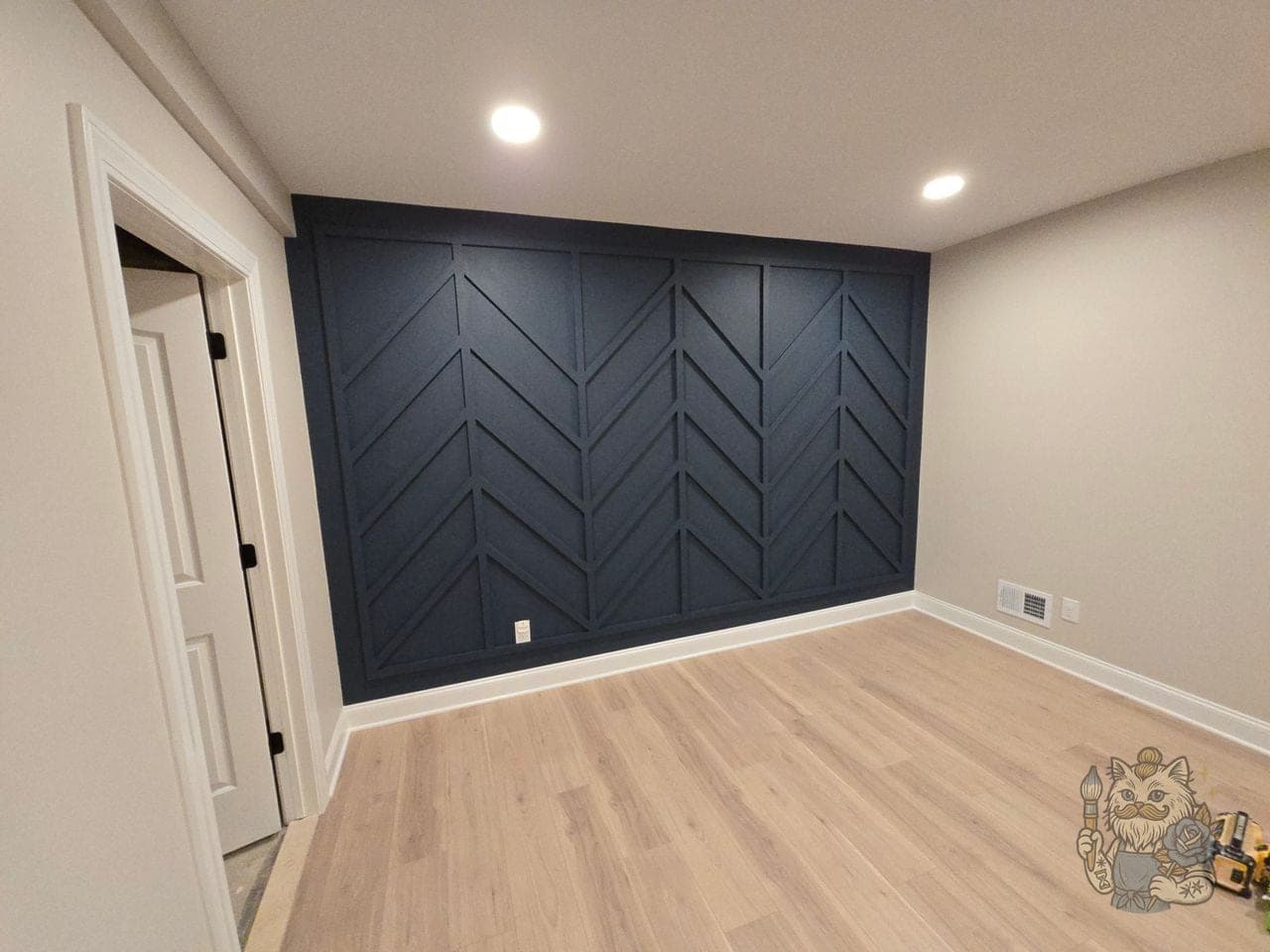
A finished basement
A large basement in Wall Township that I painted after the renovation was finished. The drywall, flooring, tile and carpentry were done by the other trades, and my part was the painting. The walls are Sherwin-Williams Duration.
3photos · swipe
Why painting quotes vary so much
Three painters can look at the same room and come back thousands of dollars apart. They aren't quoting the same job. One is rolling a coat over what's there. Another is prepping the room the way the paint manufacturer says it has to be done.
Every paint manufacturer publishes how their product goes on: how the surface is prepped, when it needs a primer, how far a gallon should be spread, how long to wait between coats. The coverage, durability and washability on the label all assume those steps were followed. My price covers every step that spec calls for.
Here's where the difference usually is:
Prep
A typical low quoteA quick skim of spackle, painted over wet or unsanded
How I do itHoles and cracks filled, sanded flat and gaps caulked
Patches
A typical low quotePainted straight over, so they show as dull spots
How I do itPrimed first, so the finish reads even
Between coats
A typical low quoteNothing
How I do itScuff-sanded, so each coat bonds to the one under it
Dust
A typical low quoteNo dust collection, dust everywhere
How I do itEvery sander hooked to a Festool HEPA dust extractor
Coverage
A typical low quoteStretched thin to make one coat do
How I do itSpread at the manufacturer's rate, two coats standard
Trim
A typical low quoteWall paint on the trim
How I do itUrethane-based trim enamel, never latex
Your house
A typical low quoteA drop cloth by the wall
How I do itFurniture moved, floors and everything else covered
Who does it
A typical low quoteA crew, after a salesperson quotes it
How I do itMe, start to finish
A cheap paint job can look fine the day it's done. The difference shows up later: patches flashing through when the light hits them, paint peeling off where it never bonded, walls that scuff the first time they're wiped.
That's why my quote may come in above others. It covers every step the manufacturer calls for, and I do the work myself.
Common Questions
A typical bedroom is 1 to 2 days with prep. Larger rooms or heavy repair work takes longer. I'll give you a timeline with the estimate.
No, I handle that. Everything gets covered and protected.
Yes. Full TSP wash, stain-blocking primers, then finish coats. It's the only way to actually eliminate the nicotine stains and odor.
Two coats standard. Color changes or repairs sometimes need a primer coat first.
Yes. I mask along the line where the wall meets the ceiling and just do the ceiling.
Age, cooking residue, smoke, or old oil-based paint yellowing over time. A stain-blocking primer where it's needed, then a fresh flat white, brings it back.
Yes. The off-season, after you've moved back to your main house, is the best time to repaint a summer home. Nobody's living there, so the work goes faster and the house is ready before you're back. I'm based in Howell and work the shore towns regularly: Point Pleasant, Brielle, Manasquan, Spring Lake and the towns around them.